Challenge
Technical education often emphasizes theoretical knowledge, while industry increasingly requires graduates who can solve complex problems, collaborate effectively, and apply knowledge in real-world contexts. This research explored how teaching methods in engineering education can be redesigned to better align with these demands.
Concept
The study developed a didactical framework that combines Design-Based Education (DBE) with evidence-based teaching strategies. The model integrates real-world design challenges, active learning, structured feedback, and flexible learning pathways. In this approach, students learn by designing, experimenting, and iterating, while teachers guide the learning process as facilitators.
Implementation
The framework was applied in three engineering modules, including applied physics, multidisciplinary engineering courses, and a product development project. Students worked on practical design challenges and collaborative projects.
Impact
The results show higher student engagement, deeper conceptual understanding, and stronger development of practical and collaborative skills—bridging the gap between education and the evolving demands of technology and industry.
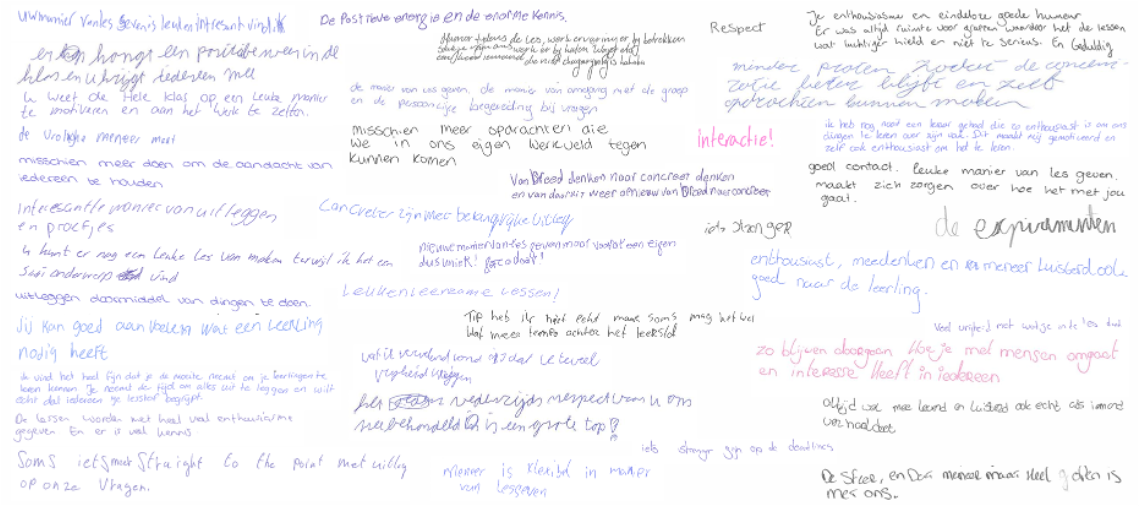
Feedback from my pupils, students and colleagues (N=208)
•Hands-on activities are highly valued: Students across all cohorts highlighted experiments, demonstrations with real materials, and practical examples as the most memorable and effective parts of the lessons.
•Teacher enthusiasm and interaction increase engagement: Students appreciated the positive energy, enthusiasm, and supportive communication, which helped create an engaging and motivating learning environment.
•Visual and practical explanations improve understanding: Using objects, experiments, and real-world engineering examples helped students better understand complex technical concepts.
•Too much theory or long explanations reduce concentration: Students reported that long lectures, difficult calculations, and extended theory sessions sometimes made it harder to stay focused.
•Students want more active participation and structure: Many suggested more opportunities to perform experiments themselves, more time for assignments during lessons, and clearer structure or pacing in projects and modules.