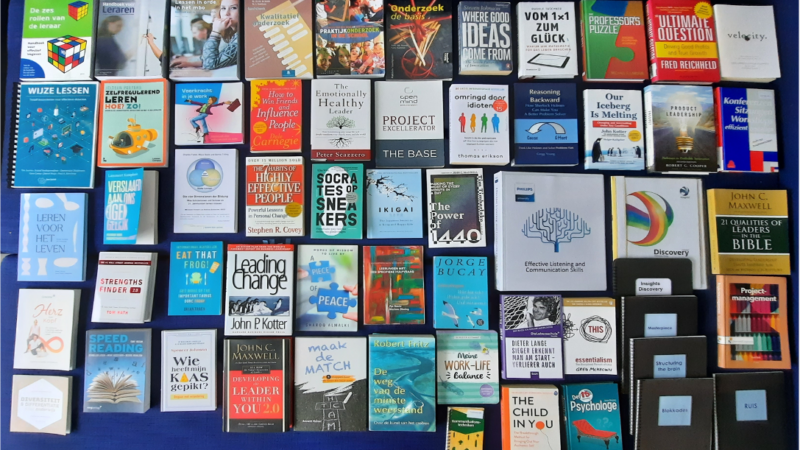
I am an open-minded farmer’s son who is creative in thinking and acting; with good empathy, integrity and a strong team spirit. After a deep understanding of the customer needs and smart analyses, I take initiative and the full responsibility to deliver innovative solutions: pragmatic and result oriented with high perseverance. With my energetic, flexible and positive attitude I’m eager to learn and implement new procedures in any field; aiming for the optimal balance and a “triple-win” among people, planet and profit.
I am ambitious in connecting people, building networks and start up innovative businesses. I have successful experiences with leading multi cultural teams in cross functional engineering projects. I love to inspire and coach others as I love to be inspired and coached by others, to grow together in our personal and professional life. My ambition is TALENT LEADERSHIP: identify, develop and utilize the potential of students and entrepreneurs to achieve their goals. Share the knowledge and passion for sustainable innovations with others globally, ultimately to drive organizational success.
Technical expertise in engineering and production, including strong management and analytical skills: problem-solving, data analysis, systems thinking, lean methodologies, effective communication and leadership.
Physics & Mechanics Teacher
A positive, flexible and collaborating mindset with strong subject matter expertise and technological proficiency are my basics for an engaged learning environment to inspire, motivate and support pupils and students for physics, material science and mechanical engineering.
Entrepreneur in mechanical & industrial engineering
Freelance
2023 - now
Leverage technical expertise in design, development, manufacturing and process optimization to create and drive innovative business ventures that solve market needs within these engineering disciplines.
Translate customer needs into innovative and manufacturable solutions. Analyze and optimize metal, polymer and assembly production processes to ensure high-quality, efficient outcomes.
Function- & Product Developer
Bedrijfsnaam
2011 - 2017
Create new products, from function analysis, initial concepts to market implementation. Innovate and collaborate with consumers, marketers, designers, technical experts, suppliers and stakeholders.
2004 - now
Diplomas and certificates
Pedagogical Teaching Certificate
NHL Stenden in the Netherlands
2024
Korte omschrijving van wat je geleerd hebt
Instructor Training
At Wirtschaftsförderungsinstitut in Austria
2021
Korte omschrijving van wat je geleerd heb
Masterclass of Personality & Public Speaking
at Tobias Beck Academy
2021
Korte omschrijving van wat je geleerd hebt
Smart Materials & Smart Manufacturing
CiSMAT
2021
Korte omschrijving van wat je geleerd hebt
Grateful Leadership
at International Institute for Learning
2021
Korte omschrijving van wat je geleerd.
(MSc) Industrial Engineering & Management
at University of Applied Sciences of FH Kärnten.
2020
Korte omschrijving van wat je geleerd hebt.
Sustainability & Corporate Social Responsibility
at FH Kärnten in Austria
2019
Korte omschrijving van wat je geleerd hebt.
Value Engineering & Management
at FH Kärnten in Austria
2019
Korte omschrijving van wat je geleerd hebt
Open Mind Management
at MANS in The Netherlands
2016
Korte omschrijving van wat je geleerd hebt
Project, Process, Performance & Change Management
at Philips in Austria
2016
Korte omschrijving van wat je geleerd hebt
Lean Development & Lean Manufacturing
at Philips in Austria
2014
Korte omschrijving van wat je geleerd hebt
Design for Six Sigma “Green Belt
at Philips in The Netherlands
2012
Korte omschrijving van wat je geleerd hebt
Modeling, Assemblies and Drafting
at Siemens in The Netherlands
2011
Korte omschrijving van wat je geleerd hebt
(BSc) Mechanical Engineering
at Windesheim in The Netherlands
2011
Korte omschrijving van wat je geleerd hebt.
Mechanical Engineering
at Linnaeus University in Sweden
2010
Korte omschrijving van wat je geleerd hebt
Mechanical Engineering
at ROC Friese Poort in The Netherlands
2008
Korte omschrijving van wat je geleerd hebt.
Agriculture, natural environment and animal care
at AOC in The Netherlands
2004
Korte omschrijving van wat je hebt geleerd.
Educational skills
Empathy & Patience
80%
Adaptability & Flexibility
95%
Classroom management
70%
Communication & Collaboration
85%
Engineering skills
Creativity & Innovation
90%
Project Leadership
75%
Problem-Solving & Critical Thinking
95%
Technical Communication
90%
Case studies
Read my case studies to get more information of what type of projects I have worked on.
Creating flexibility in synergy with conventional manufacturing technologies.
FOR ASSEMBLY TOOLING IN AUTOMATED SERIAL PRODUCTION
Creating flexibility in synergy with conventional manufacturing technologies
Challenge
Highly automated assembly systems used in serial production must become more flexible to respond to rapidly changing markets, increasing product complexity, and a growing number of product variants. Traditional tooling for assembly systems often requires high investment costs and specialized designs, which makes modifications expensive and time-consuming when products change. As a result, manufacturers face low flexibility and high financial risks when adapting production systems. There is therefore a need for a systematic method to evaluate and select manufacturing technologies that can improve flexibility, efficiency, and quality while minimizing investment risks.
Concept
The research proposes a design process methodology and decision guideline that supports industrial engineers in selecting the most appropriate manufacturing technology for assembly tooling. The approach integrates additive manufacturing and conventional manufacturing technologies, enabling engineers to evaluate different design options based on technical and economic criteria. The methodology helps determine the most suitable combination of materials, manufacturing processes, and design solutions to achieve optimal performance and flexibility.
Implementation
The methodology is structured into three phases: 1.Analysis phase: Identification of user needs and definition of functional requirements for the tooling. 2.Concept phase: Development and comparison of design concepts with different materials and manufacturing processes, evaluated on technical and economic performance. 3.Implementation phase: Calculation of the overall economic impact, including quality improvement, lead-time reduction, and cost savings.The decision guideline was validated through two case studies involving tooling in flexible automated assembly systems.
Impact
The results demonstrate that combining additive manufacturing with conventional manufacturing provides the highest economic and technical benefits. Additive manufacturing offers advantages in complex geometries and customization, while conventional manufacturing ensures high dimensional accuracy, surface quality, and cost efficiency for large production volumes. The proposed methodology supports better decision-making and enables manufacturers to improve flexibility, efficiency, quality, and overall economic performance in automated assembly systems.
Technical education often emphasizes theoretical knowledge, while industry increasingly requires graduates who can solve complex problems, collaborate effectively, and apply knowledge in real-world contexts. This research explored how teaching methods in engineering education can be redesigned to better align with these demands.
Challenge Technical education often emphasizes theoretical knowledge, while industry increasingly requires graduates who can solve complex problems, collaborate effectively, and apply knowledge in real-world contexts. This research explored how teaching methods in engineering education can be redesigned to better align with these demands.
Concept The study developed a didactical framework that combines Design-Based Education (DBE) with evidence-based teaching strategies. The model integrates real-world design challenges, active learning, structured feedback, and flexible learning pathways. In this approach, students learn by designing, experimenting, and iterating, while teachers guide the learning process as facilitators.
Implementation The framework was applied in three engineering modules, including applied physics, multidisciplinary engineering courses, and a product development project. Students worked on practical design challenges and collaborative projects.
Impact The results show higher student engagement, deeper conceptual understanding, and stronger development of practical and collaborative skills—bridging the gap between education and the evolving demands of technology and industry.
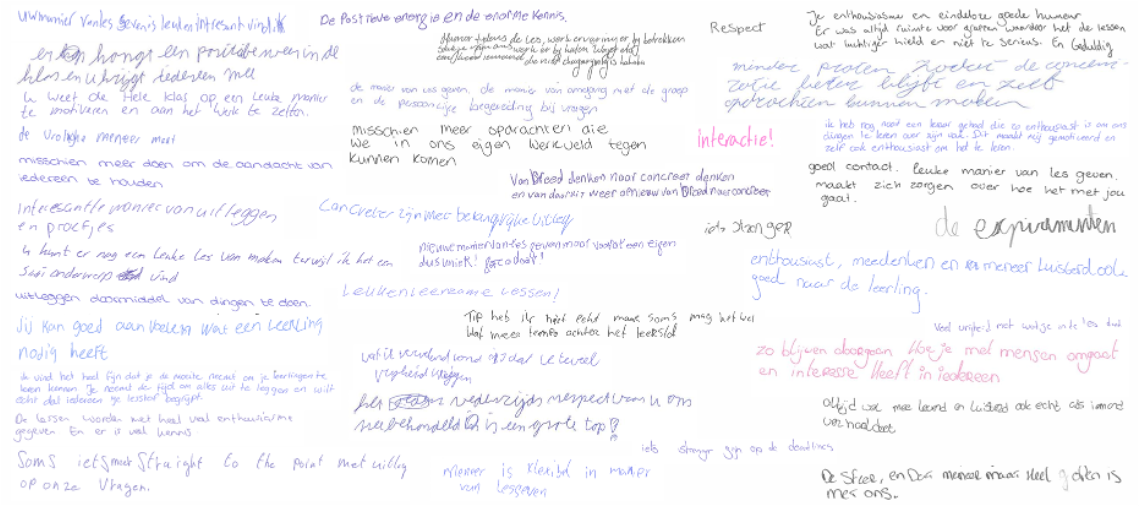
Feedback from my pupils, students and colleagues (N=208)
•Hands-on activities are highly valued: Students across all cohorts highlighted experiments, demonstrations with real materials, and practical examples as the most memorable and effective parts of the lessons.
•Teacher enthusiasm and interaction increase engagement: Students appreciated the positive energy, enthusiasm, and supportive communication, which helped create an engaging and motivating learning environment.
•Visual and practical explanations improve understanding: Using objects, experiments, and real-world engineering examples helped students better understand complex technical concepts.
•Too much theory or long explanations reduce concentration: Students reported that long lectures, difficult calculations, and extended theory sessions sometimes made it harder to stay focused.
•Students want more active participation and structure: Many suggested more opportunities to perform experiments themselves, more time for assignments during lessons, and clearer structure or pacing in projects and modules.
In a rapidly changing world shaped by technological innovation, digital transformation, and evolving labor markets, education must move beyond traditional,
maart 9, 2026
Effective Didactics in Technical Education
In a rapidly changing world shaped by technological innovation, digital transformation, and evolving labor markets, education must move beyond traditional, knowledge-centered models. My research focuses on designing effective didactics within flexible and responsive technical education, grounded in the principles of Design-Based Education (DBE).
The central challenge addressed in this study is the growing gap between traditional curricula and the dynamic demands of 21st-century society. Technical education must not only transfer knowledge, but also develop practical skills, character, collaboration, adaptability, and lifelong learning capabilities.
Image Caption
What is Effective Didactics?
Effective didactics is the art and science of teaching in a way that truly impacts learning. It combines:
Clear and structured instruction
Activation of prior knowledge
Active learning strategies
Continuous feedback and reflection
Strong classroom management
Context-sensitive and goal-oriented lesson design
Effective teaching is not only about what is taught, but especially about how learning experiences are designed to ensure lasting understanding and engagement. It requires a balance between scientific principles, reflective practice, and human empathy.
Why Design-Based Education?
Design-Based Education (DBE) integrates theory and practice by organizing learning around real-world challenges. Students work through iterative design processes—analyzing problems, developing concepts, prototyping, testing, and refining solutions.
DBE promotes:
Problem-driven learning
Interdisciplinary collaboration
Creativity and critical thinking
Practical, tangible outcomes
Student ownership of learning
Inspired by methodologies such as design thinking, systems engineering, and continuous improvement cycles, DBE prepares students for complex professional environments by bridging education and industry.
Integrating Flexible and Responsive Education
The research proposes a holistic educational framework that integrates:
Flexible and responsive learning pathways
Personal and professional development
Collaboration with industry partners
Digital innovation
The four dimensions of education: knowledge, skills, character, and meta-learning
This framework supports teachers in fulfilling their professional roles while creating adaptive learning environments that respond to student diversity and societal change.
Validation in Practice
The proposed didactical framework was tested and validated through three technical case studies:
Applied Physics for first-year engineering students
A multidisciplinary mechanical engineering module
A holistic product development project for both school-based and work-based students
Student feedback confirmed the value of interactive teaching, hands-on experimentation, and real-world relevance. At the same time, the research highlights the importance of clarity, structure, and balanced guidance in flexible learning environments.
Toward Future-Ready Technical Education
This research demonstrates that effective didactics in technical education requires a dynamic balance between structure and flexibility, theory and practice, innovation and human connection.
By combining Design-Based Education with evidence-informed teaching strategies, we can create learning environments that:
Foster collaboration and shared expertise
Address student diversity
Integrate theory with real-world application
Encourage lifelong learning
Prepare students for sustainable innovation in a rapidly evolving world
The ultimate goal is to design education that empowers students not only to become skilled professionals, but also adaptive, responsible, and innovative contributors to society.
Willem Maat, MSc
Entrepreneur – mechanical & industrial engineering Lean development & manufacturing | Design for Six Sigma
I am available for freelance work. Connect with me via and call in to my account.